

Marketing Communication. Capital at Risk. For Professional Investors Only. Please read fund legal documentation before making any final investment decisions.
From Cyclical Metal to Strategic Constraint
BOTTOM LINE
Copper demand has historically leaned on construction, autos and China infrastructure waves – sectors with meaningful cyclical exposure.1 Today, the centre of gravity is rotating toward AI/data-centre campuses, power grids, defence rearmament, EVs and fast-charging – programmes mapped years ahead by utilities, hyperscalers and governments, and therefore less sensitive to short-term cycles.2
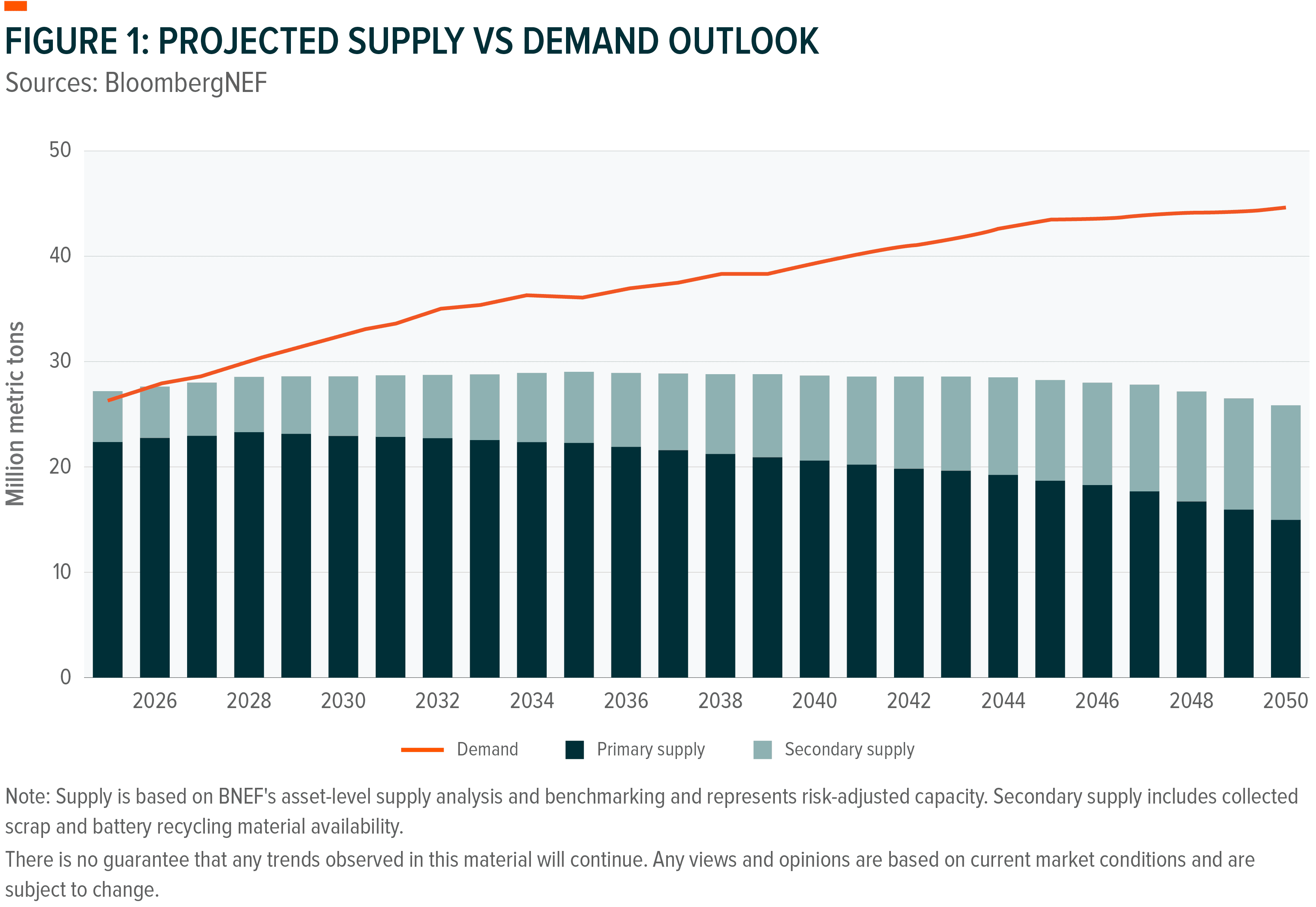
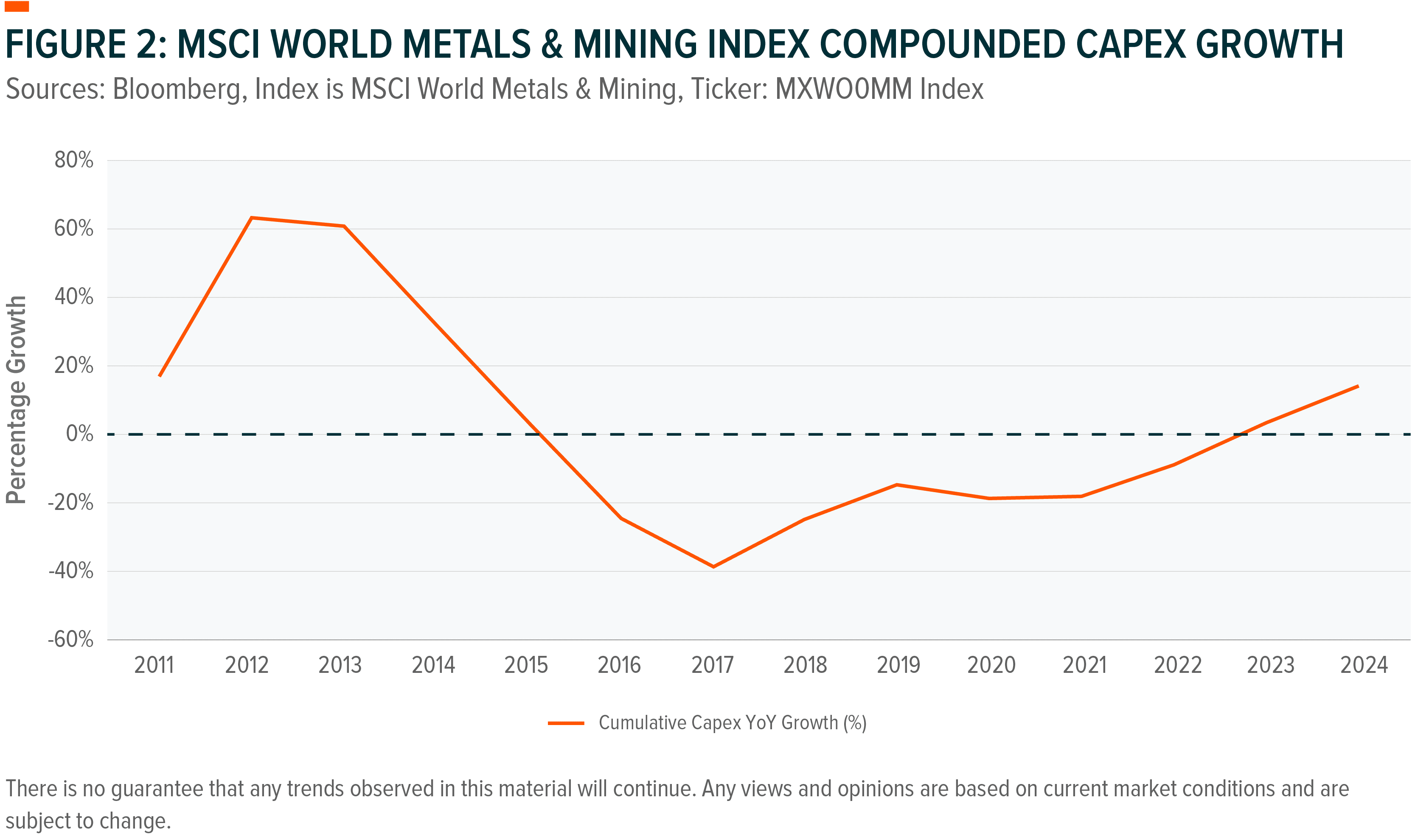
On the supply side, near-term refined balances look comfortable (despite some signs of tightness along the refinery chain), with forecasts of a surplus in 2026, but the forward-looking supply pipeline may give way to structural tightness as new mined output lags strong projections in demand.3 Announced mines meet only ~70% of primary supply needs by 2035, implying persistent tightness unless more projects, brownfield debottlenecks and recycling scale materialise.4 Meanwhile, diversified miners are pivoting towards copper via M&A and capital markets, potentially signalling a strategic bid for high-quality copper optionality.5,6,7
As this tightening supply outlook meets surging physical demand, copper is emerging as not just a beneficiary of the AI buildout, but as a potential constraint – the critical material that could govern its speed and scale.
1) Data Centres & Digital Infrastructure
Why demand growth is “real economy” and sticky
- AI build-outs are multi-year commitments:
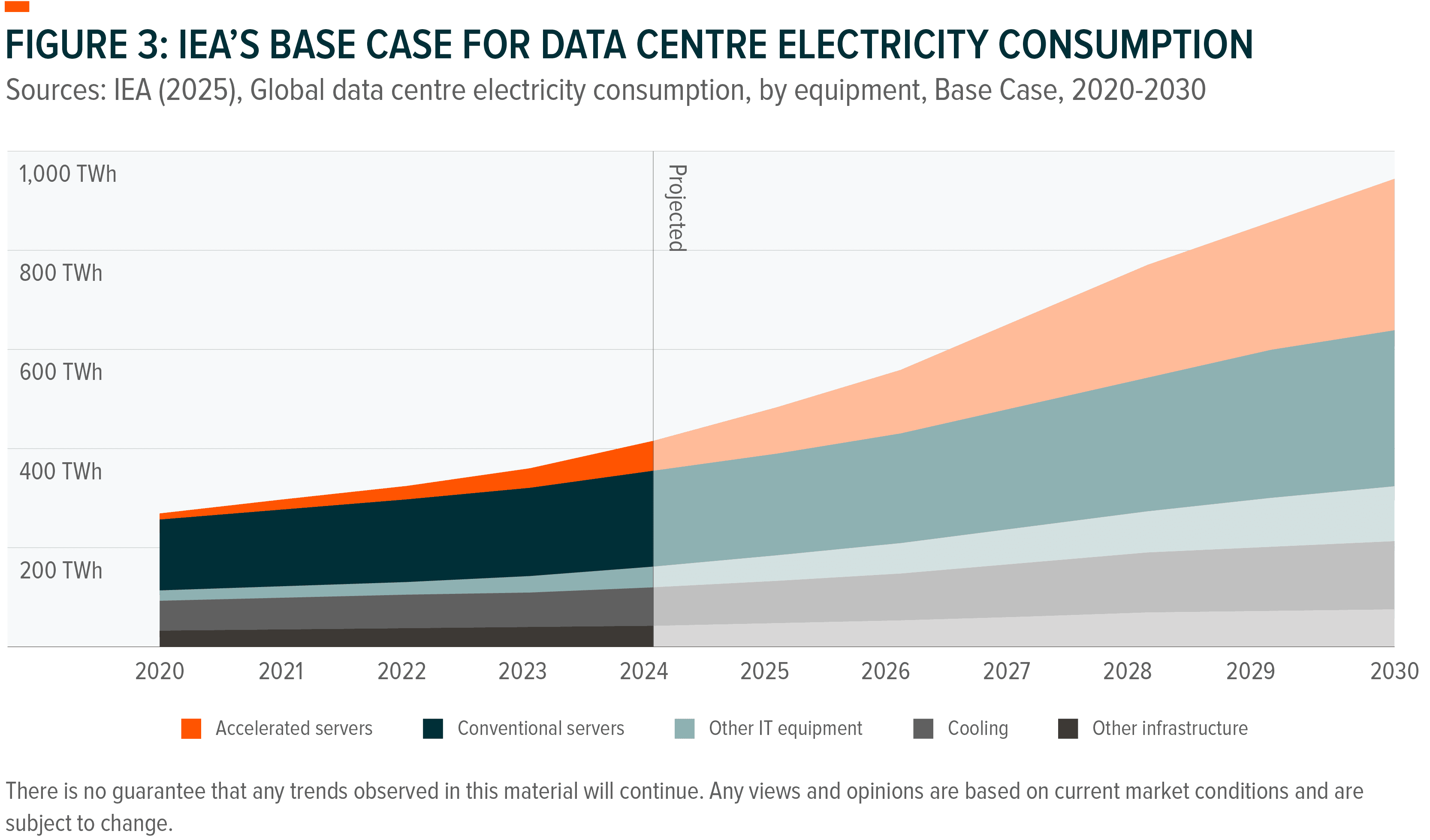
- The IEA expects data-centre electricity demand to more than double by 2030, largely due to AI—potentially locking in long-dated electrical packages rich in copper.8
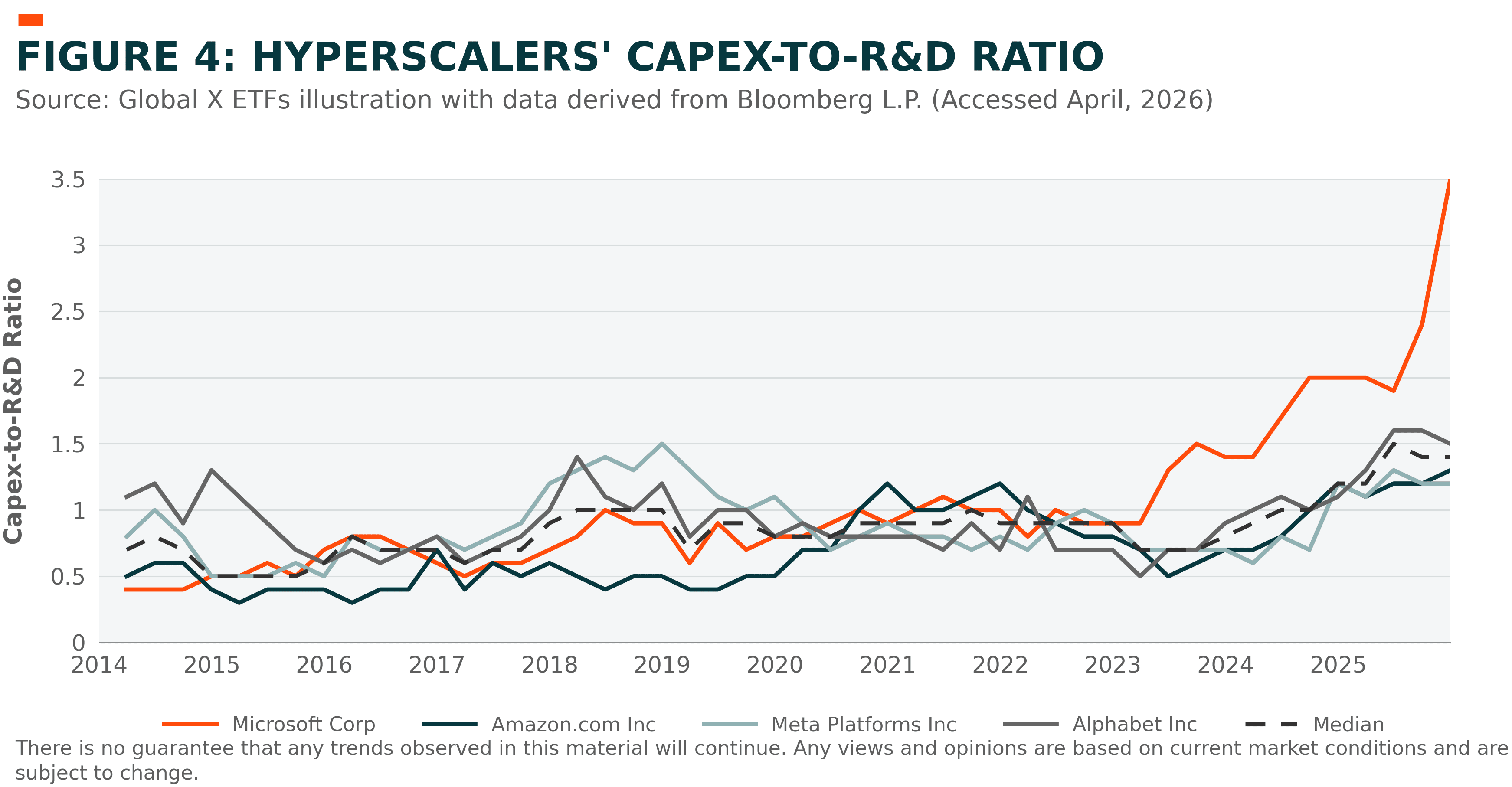
- Hyperscaler capex has shifted from R&D to concrete and cables:
- Dell’Oro projects global data-centre capex compounding ~21% annually to 2029, with hyperscalers accounting for ~50% of a ~$1.2T total—sustained ordering for power gear, busbars and switchrooms.9
- Campus scale is rising, not just count:
- Synergy counts 1,136 hyperscale sites by end-2024 and notes increasing average size/density—each increment scaling electrical copper needs.10
Persistence of Demand
DC campuses are planned, permitted and power-contracted on multi-year arcs; grid equipment and cable lead times have lengthened, reducing cyclicality.11
2) Defence Rearmament
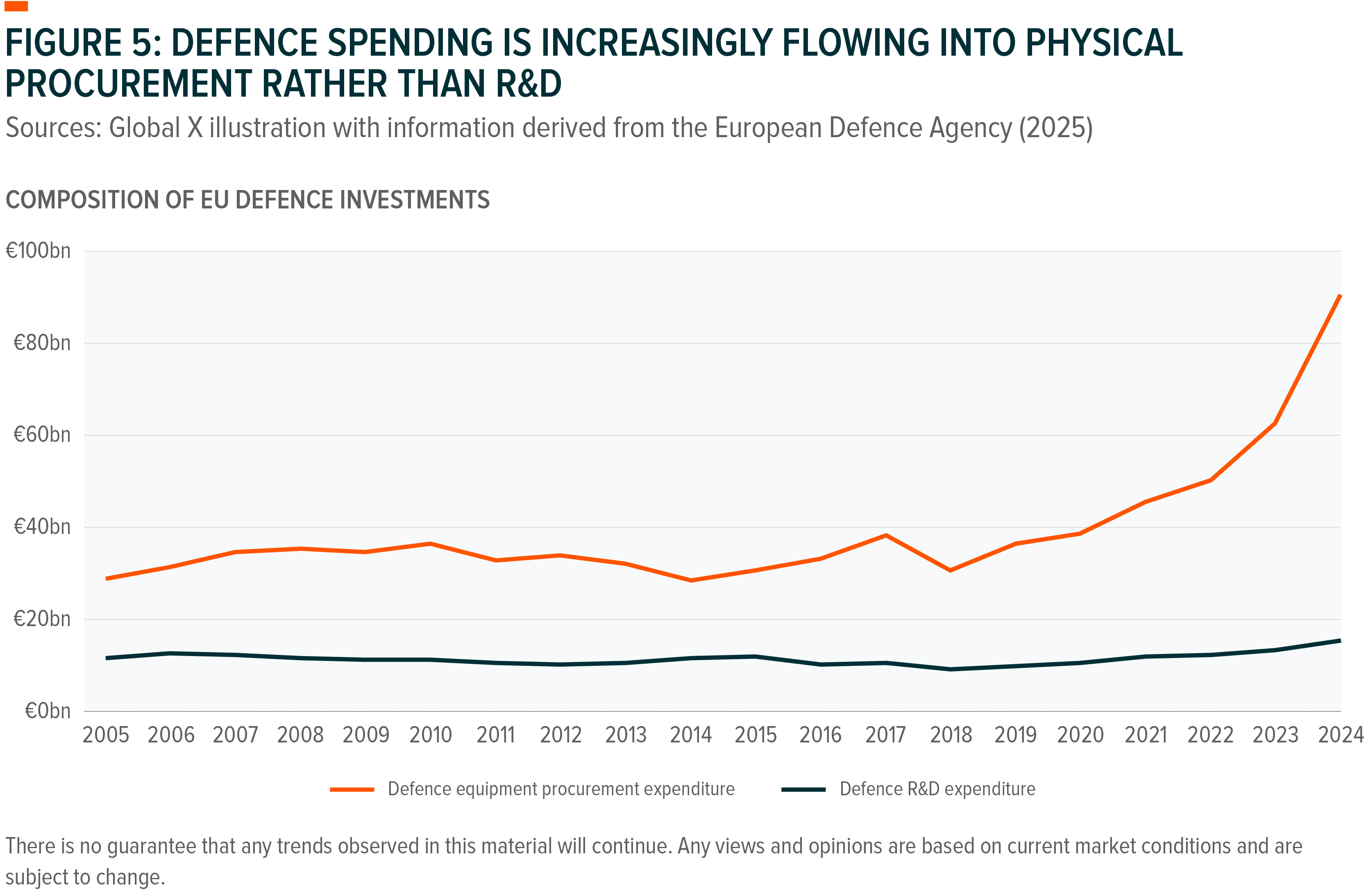
Structurally Higher Spending, with an Emphasis on Procurement over R&D
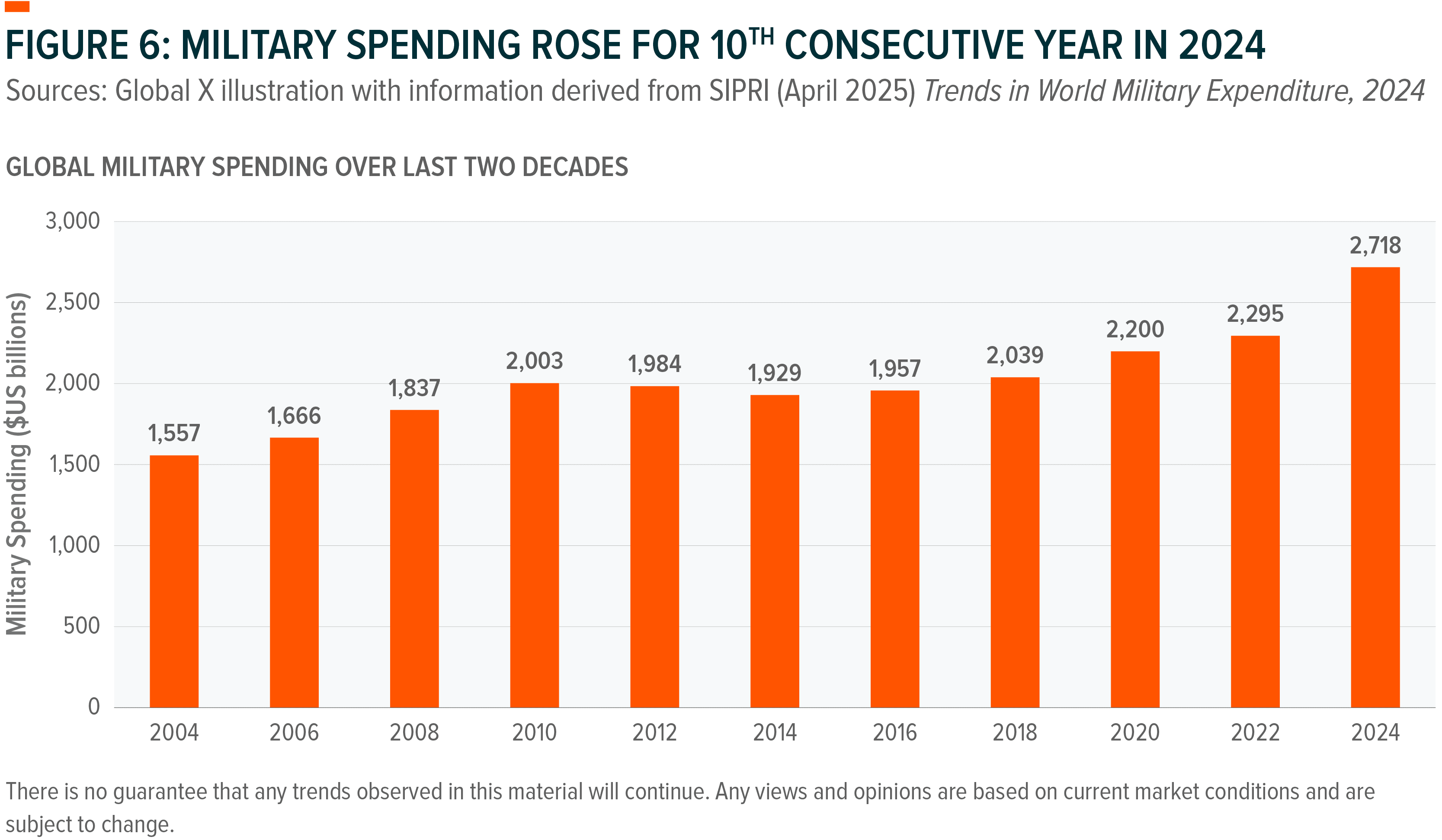
- Budgets are stepping up for a decade-plus:
- NATO adopted a 5%-of-GDP defence and security investment goal by 2035 (3.5% core defence + 1.5% related), structurally lifting procurement capacity.12
- Near-term floor is already higher:
- By 2025 all 32 NATO members met the longstanding 2% target, increasing sustained demand for platforms and munitions with high copper content.13
- Europe is rebuilding stockpiles and industry:
- The EU’s ASAP mobilises finance and permitting to expand ammunition/missile capacity—multi-year factory and tooling cycles with heavy electrical content.14
Persistence of Demand
Rearmament is policy-driven and multi-year; once appropriated and contracted, spend tends to execute through cycles.15
3) Power Grids, Transformers & HV Equipment
Investment in Grids is Stepping up and Copper Intensive
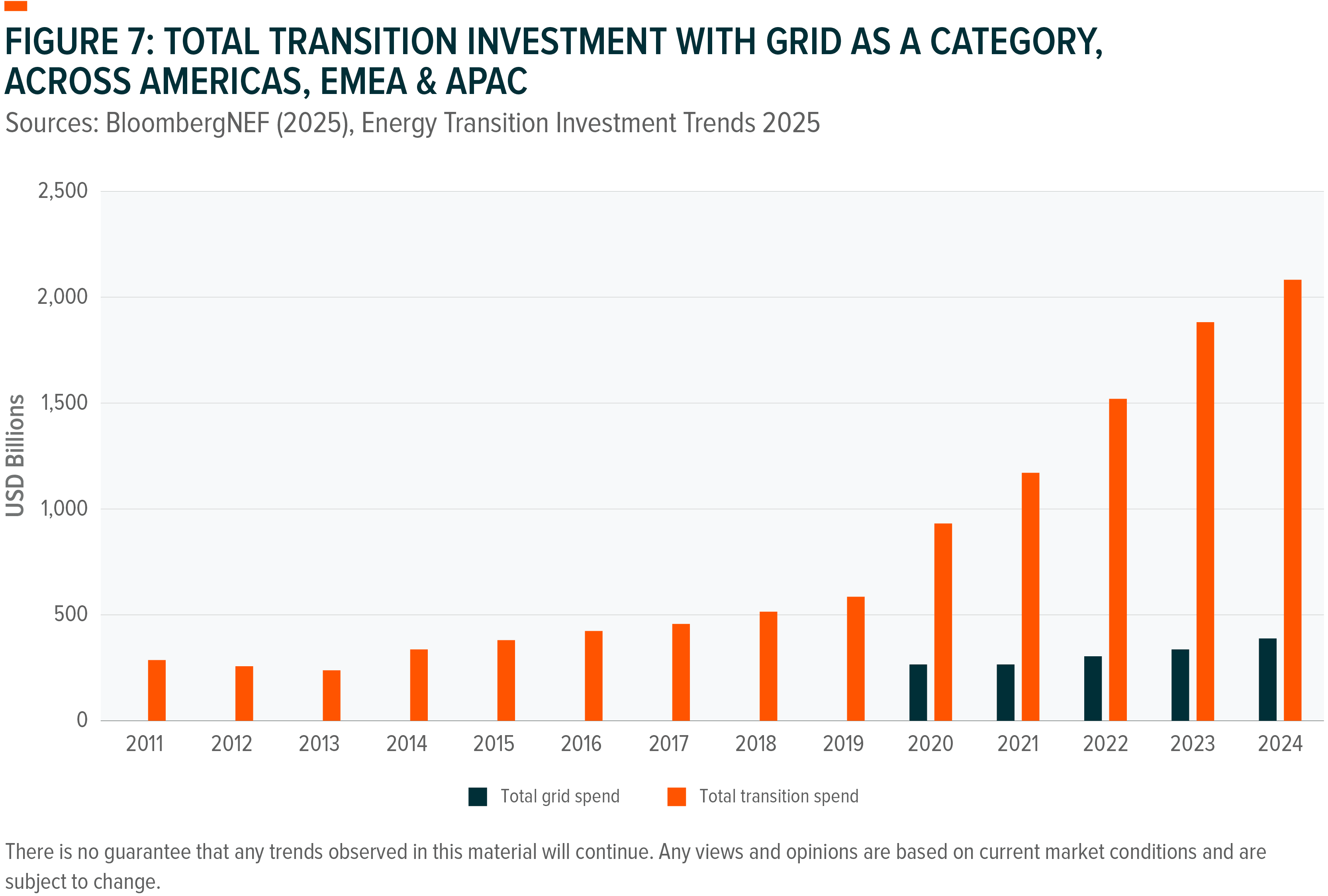
- Grid investment has seen a resurgence after decades of flat investment:
- Grid investment across Americas, EMEA and APAC saw no investment within ‘transition’ budgets until 2020, since which there’s been a 46% increase.16
- Lead times and prices reset higher:
- Since 2019, cable prices nearly doubled; transformer prices rose ~75%; delivery times for HVDC cables and large transformers stretch years—smoothing order books.17
- Materials price sensitivity is real policy risk:
- Copper and aluminium are ~20% of grid investment costs, so planners pre-commit to secure packages and timelines—another anchor for demand.18
- Investment momentum is broad-based:
- Global grid capex set new records and continues to rise as governments prioritise reliability and decarbonisation, sustaining copper pull even through macro noise.19
Persistence of Demand
Regulated utilities build to mandated reliability and connection targets; once procurement starts, packages typically run to completion.20
4) EVs and Fast-Charging
Transition to EVs and Fast-Charging Uses Incrementally More Copper
- Vehicle copper intensity steps up structurally:
- A battery-electric car uses roughly three to four times as much copper as an ICE—compounding fleet-wide demand as EV share grows.21
- Charging is copper-hungry on the power side:
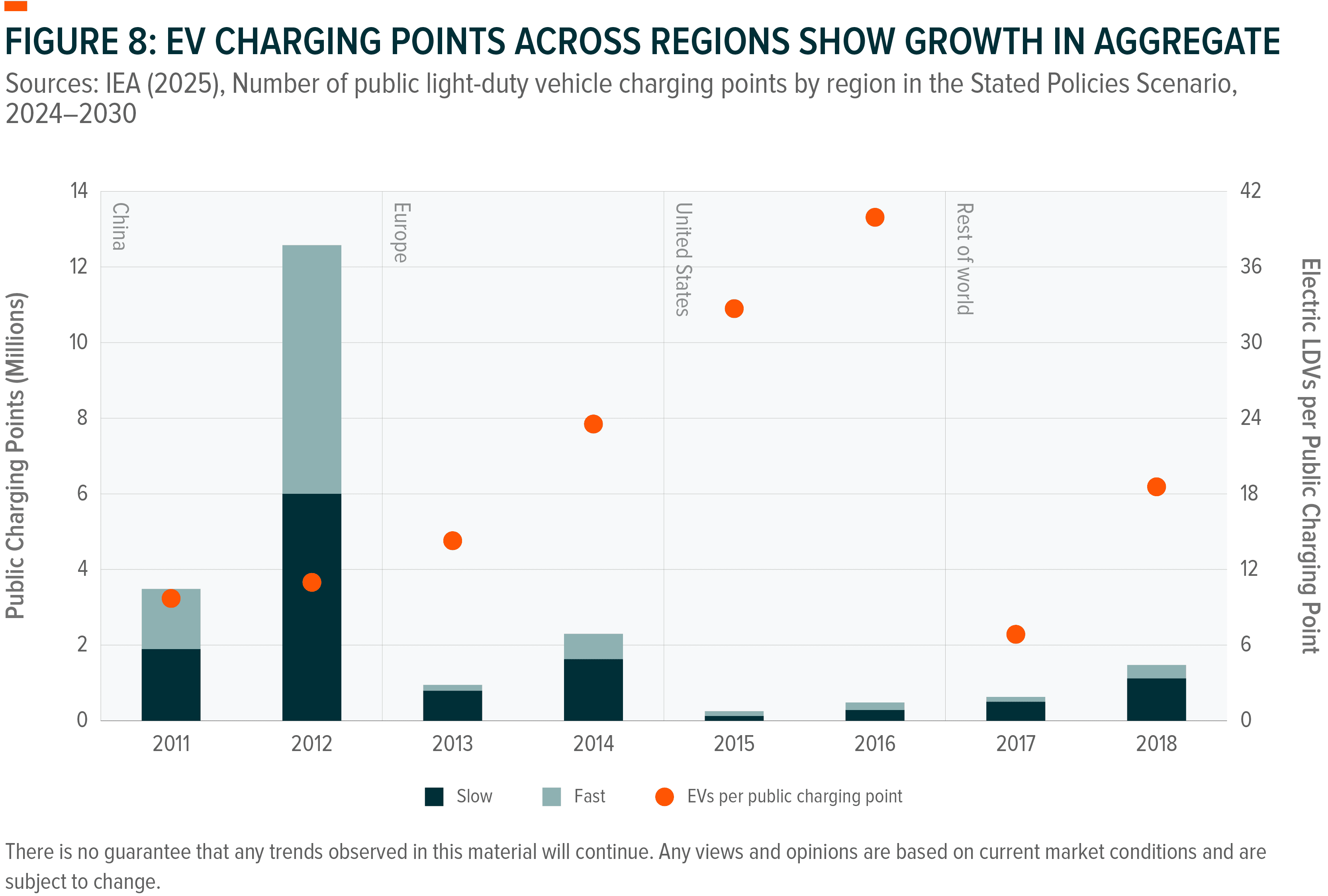
- A DC fast-charger can require about an order of magnitude more copper than a typical Level-2 AC charger—small units add up fast, but it’s fast-charging that really loads the grid.22
- Policy programmes keep the pipeline moving:
- In the U.S., revised NEVI guidance (Aug-2025) restarts and streamlines deployments—fueling multi-year sitework and electrical buys despite near-term swings in EV sales.23
Persistence of Demand
National network targets and OEM model pipelines shape a steady cadence of chargers and copper-heavy power upgrades.24
5) Buildings & Industrial Electrification
Industrial Electrification Continues, and Requires More Power
- Efficiency standards are tightening:
- Only about three in five industrial motors are covered by minimum standards today—policy catch-up drives replacement/retrofit cycles that are copper-intensive.25
- Heat-pump adoption wobbled, but policies persist:
- After a 2023–24 dip in Europe, signals point to a policy-supported rebound and continued U.S. growth—keeping the medium-term electrification trend intact.26
- Electrification is a productivity play, not just climate:
- Upgrades improve reliability and operating costs, so projects tend to proceed once financed—tempering macro cyclicality.27
Persistence of Demand
Regulatory ratchets and corporate energy-cost logic underpin steady retrofit cycles rather than stop-start spending.28
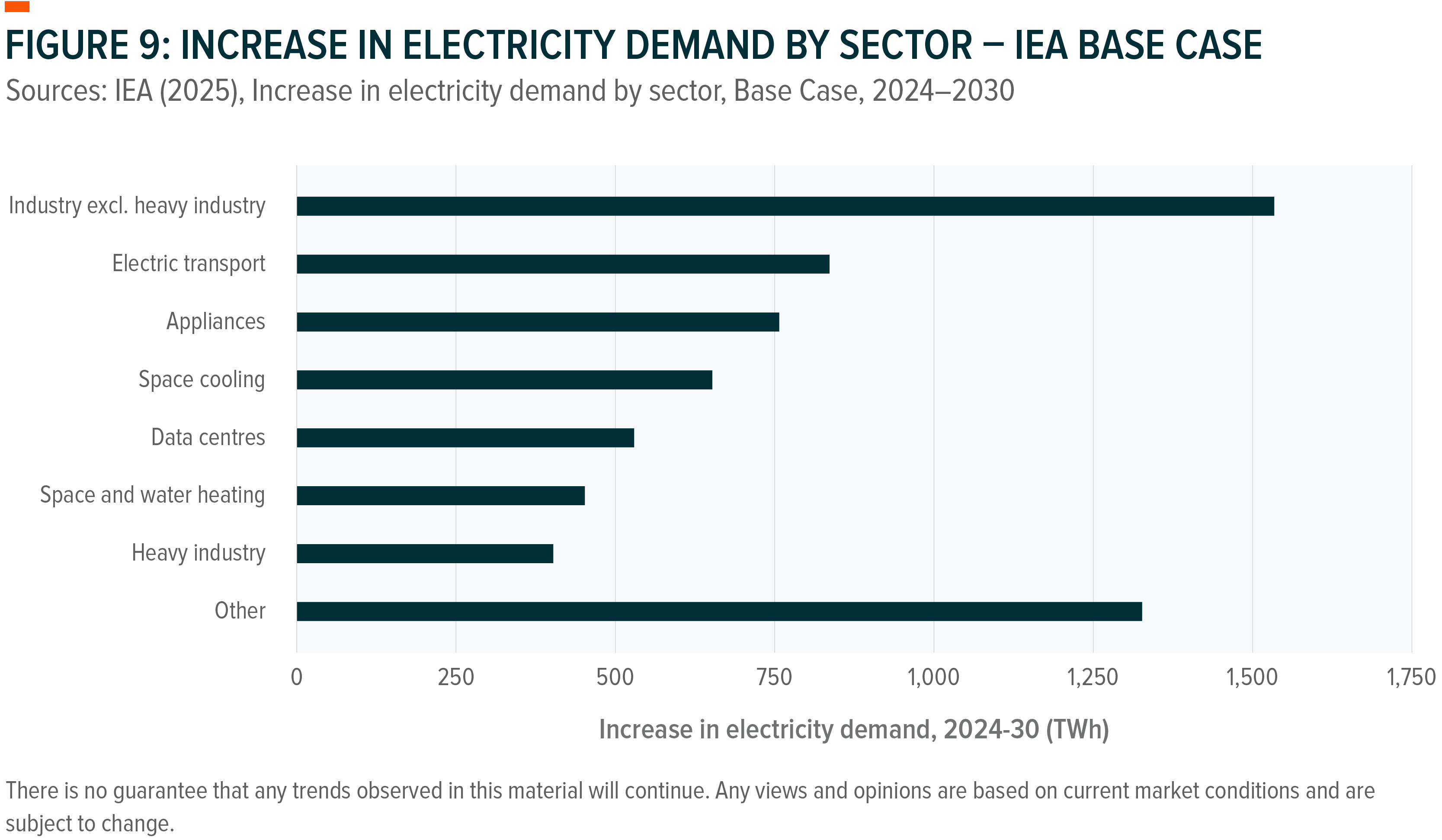
What this Means for Miners
- Demand is likely less cyclical than it used to be. With utilities, hyperscalers, EV infrastructure and defence driving a larger share of copper use, miners can plan production and marketing against more “scheduled” demand rather than volatile construction and discretionary goods.29
- Long lead times favour incumbents and brownfield projects. Average mine lead times have stretched toward ~18 years globally; expansions and debottlenecks at existing complexes are advantaged as markets tighten.30
- Structural tightness argues for discipline, not volume at any cost. On today’s pipeline, announced mines meet only ~70% of 2035 needs; capital is best deployed where geology, power and water are de-risked, with offtake optionality into data-centre grids, EVs and defence.31
- Consolidation signals strategy, not exuberance. Recent deals point to “buy quality copper optionality” rather than invest in production – healthy capital discipline for the cycle ahead.32