
Europe

Marketing Communication. Capital at risk. For Professional Investors Only. Please read fund legal documentation before making any final investment decisions.
Much can change in two years. Political transitions, trade disputes, geopolitical conflict, and the rapid growth of artificial intelligence investment have reshaped the macroeconomic and industrial backdrop since my original article on electric vehicles and the potential impact of tariffs. This update revisits the earlier thesis, separates global growth from regional divergence, and considers where value may accrue as automakers adapt.
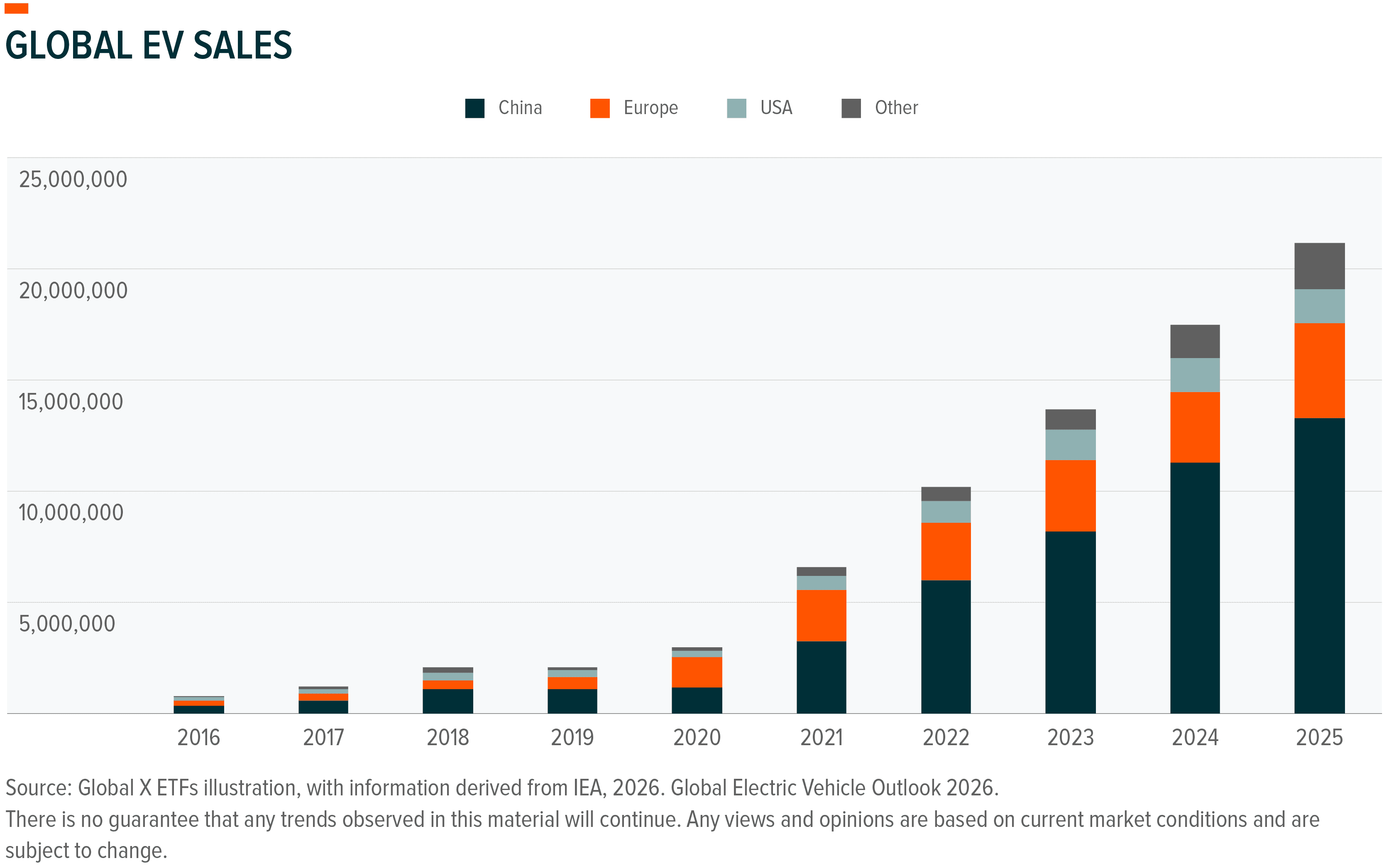
Firstly, global EV sales have continued to grow, rising 27.7% in 2024 and 21.1% in 2025.² For context, global EV sales in 2025 were 7x the sales in 2020.³ A significant portion of this growth has been driven by China, which accounted for more than half of global EV sales in 2025.⁴ Given these figures are only for sales up until the end of 2025, they do not factor in the positive impact that the sharp increase in oil prices in early to mid-2026 have had on EV demand. Global EV car sales penetration grew 3.4% to reach 26.1% in May, its second-highest level ever, with 12 of the world’s 15 largest EV markets seeing rising penetration.⁵
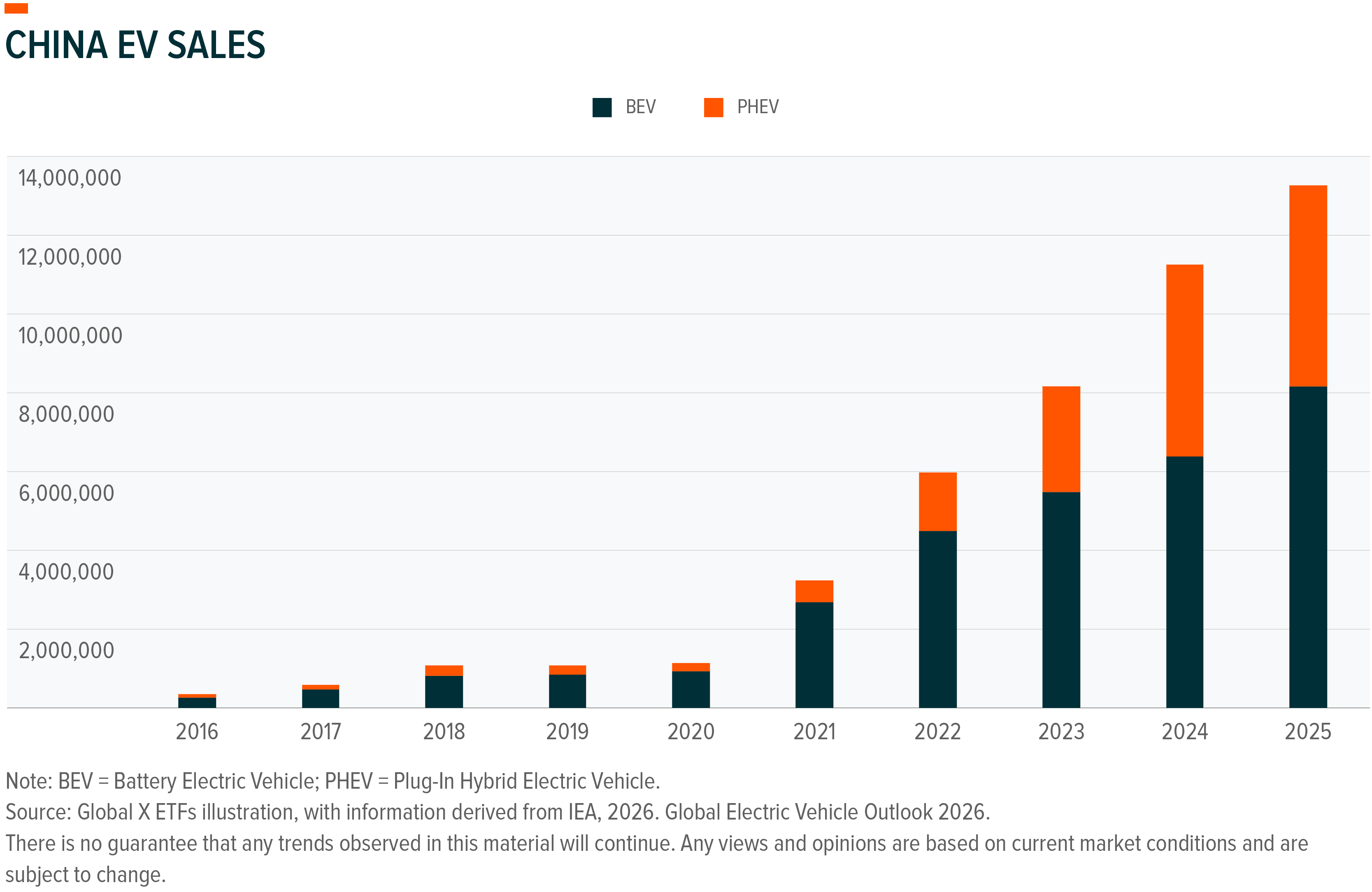
Secondly, China remains the centre of EV sales growth, but domestic competition has been more intense than expected. Price cuts have supported adoption and accelerated the displacement of internal combustion engine (ICE) vehicles, but have also compressed industry margins. Chinese regulators have urged manufacturers to resist price wars,⁶ while BYD, the world’s largest EV manufacturer, experienced margin compression and reported its first annual profit decline in four years.⁷ The investment case increasingly depends on cost leadership, product mix, balance-sheet strength and the ability to sustain pricing, rather than unit growth alone.
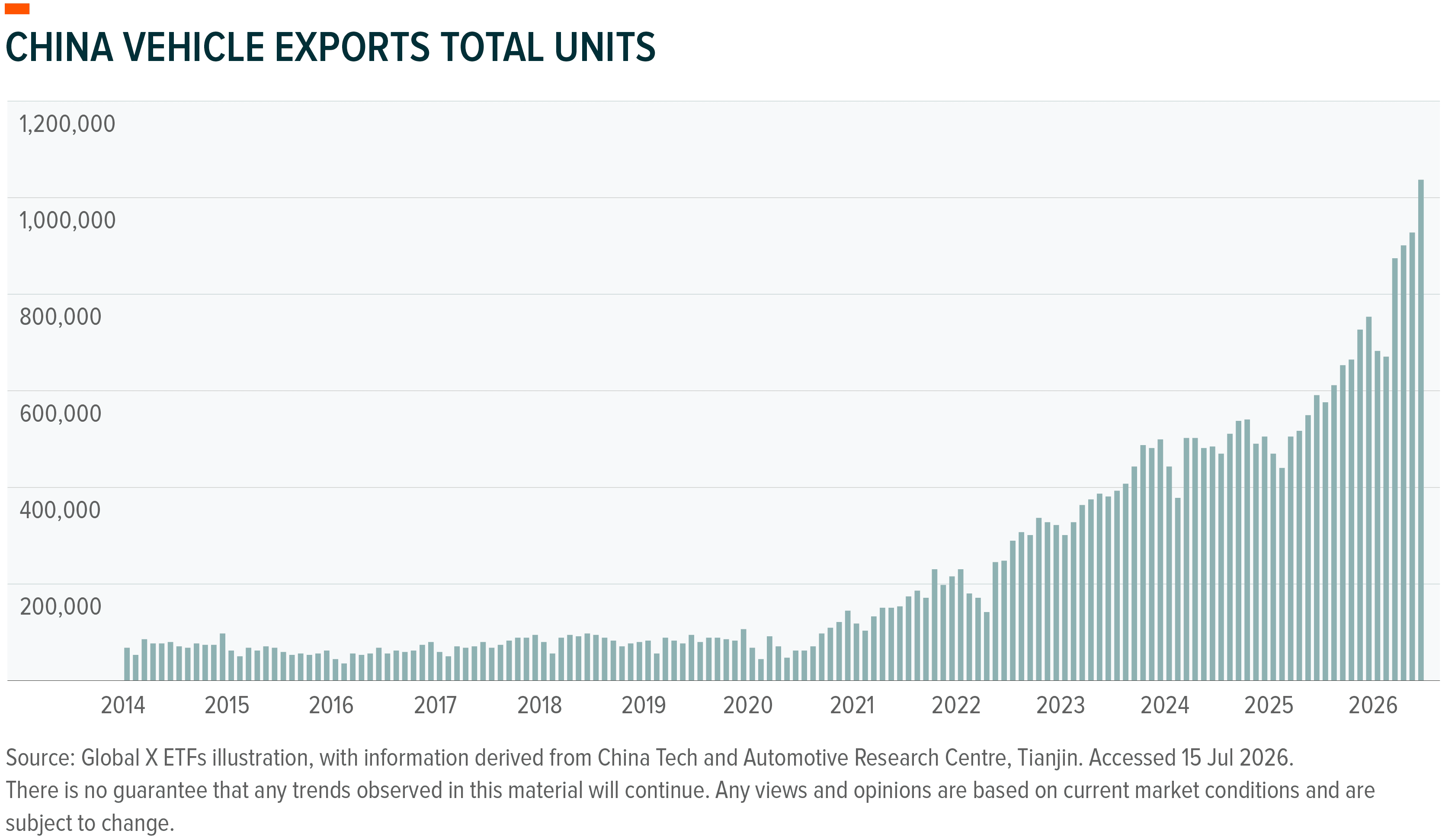
Thirdly, spare capacity and difficult domestic economics have pushed Chinese auto manufacturers towards overseas markets, a trend identified in my original piece. China’s monthly vehicle exports exceeded one million units for the first time in June 2026.⁸ Overseas markets can offer higher margins, even after tariffs, taxes, and shipping costs,⁹,¹⁰ while premium marques such as BYD’s Denza and Yangwang can support stronger pricing power and brand perception.¹¹ Tariffs have changed the route to market, rather than prevented expansion. Chinese groups are pursuing local production, partnerships, and the use of underutilised European factories.¹² These strategies bring execution risks, including capital intensity, local distribution, political scrutiny and disagreements over control. BYD, for example, has a preference to operate factories itself,¹³ while some legacy plants may be poorly suited to new platforms, with Volkswagen recently having to shut down its Dresden factory, the first to close in Germany in 88 years.¹⁴
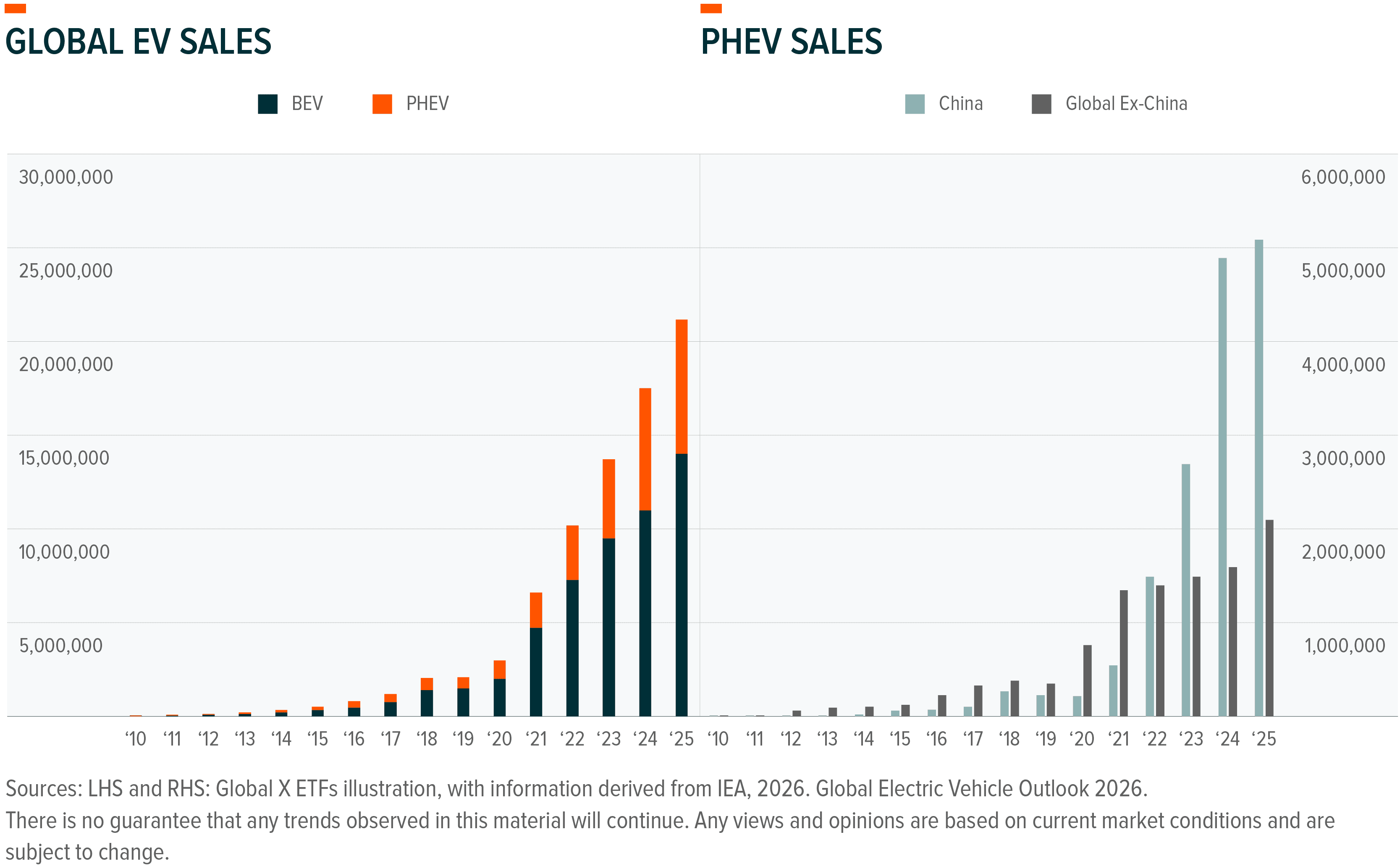
Finally, range anxiety has eased, but not solely because batteries are becoming larger. The International Energy Agency (IEA) estimates that the average BEV range has plateaued at almost 380km as manufactures balance range, vehicle weight and cost.¹⁵ However, expanding charging networks and faster charging have reduced the need for ever-larger battery packs.¹⁶ Plug-In Hybrid EVs (PHEVs) and extended-range EVs can offer a practical transition for drivers without reliable recharging access, although their emission benefits depend heavily on frequent charging and real-world driving patterns.¹⁷ Growth in these powertrains has been concentrated in China, while global PHEV sales ex-China have stagnated since 2021.¹⁸ Battery swapping also remains concentrated in China, but fast-charging may prove more transferable across markets, with BYD planning to roll out 6,000 fast-charging stations globally,¹⁹ including 3,000 in Europe.²⁰ The market is therefore likely to support several powertrains, selected according to use case, infrastructure and regulation.
Global growth masks pronounced regional differences. In the United States, EV sales were slightly lower in 2025, and fourth-quarter sales fell 45% year-on-year after federal clean-vehicle tax credits ended in September and fuel-economy enforcement was weakened.²¹ By contrast, European EV sales increased by more than 30% as tighter CO2 standards took effect, while sales in emerging markets and developing economies outside China rose by around 80%.²² Government support per EV has declined globally as markets mature, but policy changes can still materially affect the timing of demand and the economics of local production.²³
Ford, General Motors and Stellantis have responded by reducing or redirecting EV investment, particularly in North America. Ford expects approximately $19.5 billion of special items as it cancels selected larger EVs and concentrates on affordable EVs, hybrids and extended-range models.²⁴ GM recorded $7.9 billion of 2025 EV strategic realignment adjustments after revising expected demand and capacity in response to US policy changes.²⁵ Stellantis announced approximately EUR 22.2 billion of charges, including EUR 14.7 billion related to product plans and lower expected BEV volumes and EUR 2.1 billion to resize its battery supply chain; it also cancelled the planned Ram 1500 BEV.²⁶ These are strategic resets rather than complete exits, with each group continuing to invest in electrified products. The lesson is that global EV adoption can rise while individual manufacturers destroy capital where volume, pricing or policy assumptions prove too optimistic.
Competitive pressure is also changing how European auto manufacturers develop vehicles. Partnerships between Volkswagen and Xpeng,²⁷ Audi and SAIC,²⁸ and Stellantis and Leapmotor,²⁹ involve platform- or technology-sharing arrangements to reduce development costs and shorten time to market. Whilst the former two partnerships target the Chinese EV market, the latter is primarily aimed at markets outside China.³⁰ European automotive executives increasingly acknowledge that expertise now flows in both directions, with Chinese partners contributing EV technology, digital capabilities and faster development processes,³¹ a reversal of the industry’s traditional pattern of knowledge transfer. However, while these partnerships may improve time to market, they create risks around brand differentiation, governance, intellectual property, and long-term bargaining power.
Another emerging trend is the expansion of auto manufacturers into adjacent industries that can leverage their industrial scale, supply chains, and technological expertise. Humanoids robotics is one example, although auto manufacturers currently occupy different positions in the value chain. BMW and Mercedes-Benz are primarily testing robots supplied by specialist developers such as Figure and Apptronik,³²,³³ while Tesla,³⁴ Xpeng,³⁵ and Hyundai Motor Group, through Boston Dynamics,³⁶ are pursuing the development or commercialisation of humanoid platforms themselves. With a significant projected total addressable market,³⁷ humanoids could present an additional revenue stream for auto manufacturers, in which there are synergies with their existing technological and manufacturing capabilities.
Automotive manufacturing provides a relatively controlled environment in which robots can first be trained, before broader deployment. BMW, for example, reported that a Figure robot performed a specific sheet-metal handling task in the production of more than 30,000 BMW X3 vehicles over ten months.³⁸ However, such deployments remain concentrated in narrow, repetitive applications rather than demonstrating general-purpose autonomy.³⁹
The strategic overlap is nevertheless meaningful, spanning batteries, electric motors, sensors, computer vision, AI and high-volume manufacturing.⁴⁰ Tesla has explicitly described its robotics strategy as an extension of the systems and components developed for its vehicles,⁴¹ while Hyundai plans to combine Boston Dynamics’ robotics expertise with the group’s manufacturing data, component suppliers and production network.⁴² Humanoids could therefore create a long-term growth opportunity for selected automakers, initially through manufacturing and logistics and potentially later through broader commercial applications. Automakers’ manufacturing scale and service capabilities may offer an advantage, although it is too early to determine whether their existing vehicle distribution networks will translate effectively to an enterprise or consumer robotics market.
Defence equipment is another category that has sought to utilise the spare manufacturing capacity and technological know-how of auto manufacturers. Renault has agreed to work with French defence group Turgis Gaillard to manufacture airborne drones at its Le Mans factory,⁴³ and with Thales on the TOUTATIS loitering munition, targeting production of up to 1,000 units per month from 2027.⁴⁴ Mercedes has partnered with defence start-up Tytan Technologies to manufacture drones, while Volkswagen has reportedly discussed producing launchers for Rafael’s Iron Dome system.⁴⁵ Whilst adapting parts of the supply chain to manufacture defence equipment could offer some relief from the competitive pressures that European auto manufacturers are facing, the opportunity is likely to remain selective as defence products have distinct certification, procurement, security and volume requirements, and experts have warned that it is not a universal solution to their current issues.⁴⁶
Battery energy storage is a closer strategic adjacency because it uses related cells, supply chains and manufacturing capabilities. Demand is rising as renewable generation, data centres, and grid resilience requirements expand. The European Union’s first tri-partite storage agreement included pledges from 22 EU member states to build 30-35 GW of energy storage capacity over the next two years.⁴⁷ CATL, which supplied over 40% of global EV battery demand in early 2026,⁴⁸ sold 121 GWh through its energy storage business in 2025, up 29.1% year-on-year.⁴⁹
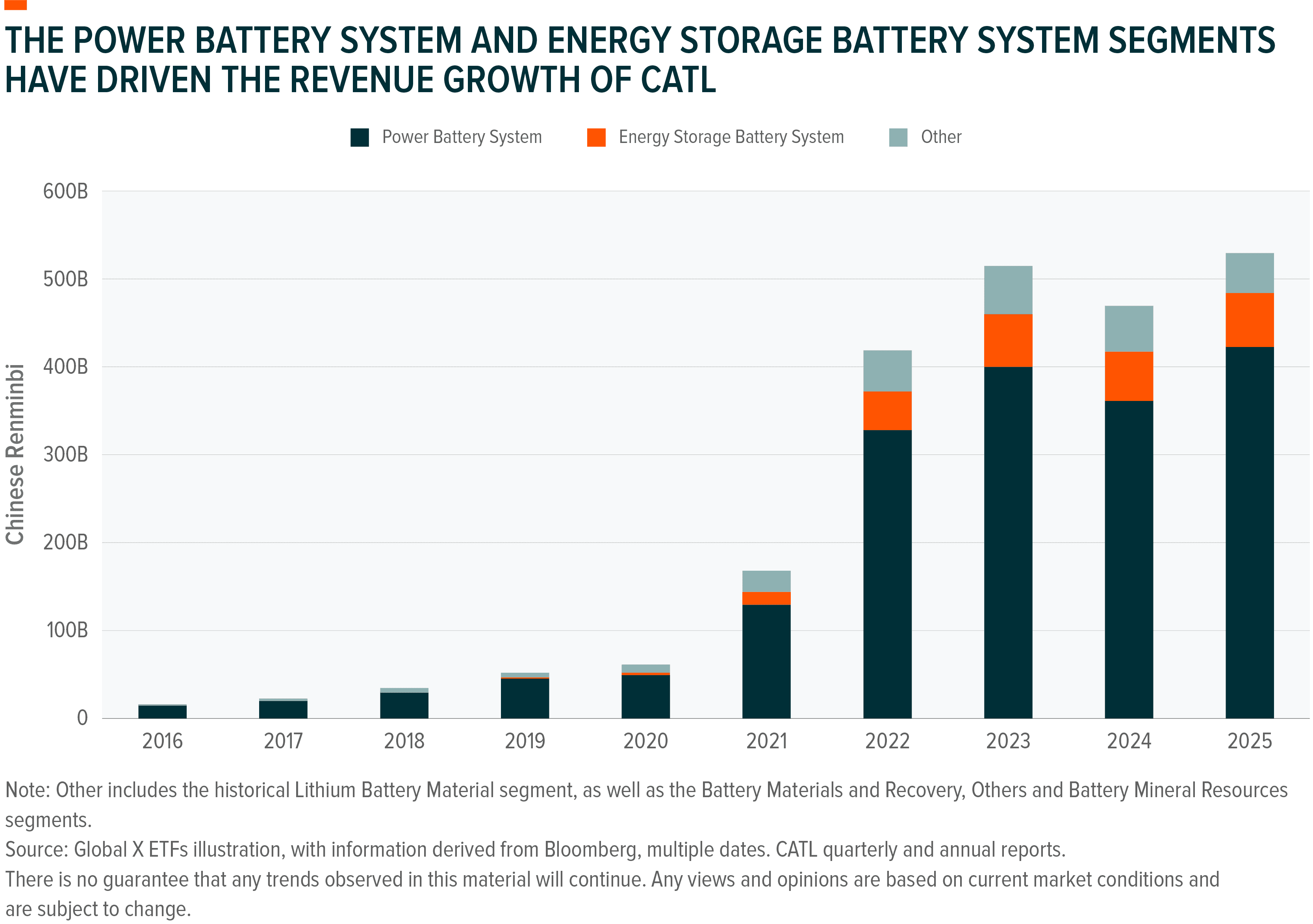
Tesla remains the automotive benchmark, having reported “energy generation and storage” separately since 2016,⁵⁰ and deployed 13.5 GWh in Q2 2026 alone.⁵¹ Ford has now launched ‘Ford Energy’, targeting at least 20 GWh of annual US production from late 2027,⁵² and signing a 5-year deal with renewable power developer EDF to provide up to 20GW of storage capacity, with deliveries expected to begin in 2028.⁵³ Other companies that have entered this field include GM,⁵⁴ Hyundai,⁵⁵ and Volkswagen,⁵⁶ are pursuing different combinations of stationary storage, vehicle-to-grid services and energy trading. Whilst unlikely to be a standalone solution, this segment could improve utilisation of battery assets, diversify revenues, and introduce a new source of growth amidst competitive pressures in the auto market.
The technology opportunity is clearer when separated into these three segments; electrification, vehicle computing and autonomous driving. Electrification directly increases demand for batteries, inverters, power semiconductors, battery-management systems, thermal management and charging hardware. Battery chemistry is a portfolio decision rather than a single technological race. Lithium iron phosphate (LFP) accounted for more than 55% of global EV battery deployment in 2025 and offers a significant cost advantage, while higher-energy-density nickel chemistries remain relevant for longer-range and performance vehicles.⁵⁷ Sodium-ion batteries could suit lower-range vehicles and cold climates, but their supply chain remains small, while solid-state batteries promise higher range and safety, yet the IEA expects mass-market adoption to remain limited until at least the first half of the 2030s.⁵⁸ Overall, manufacturing yield, cost and supply-chain resilience may matter as much as headline laboratory performance.
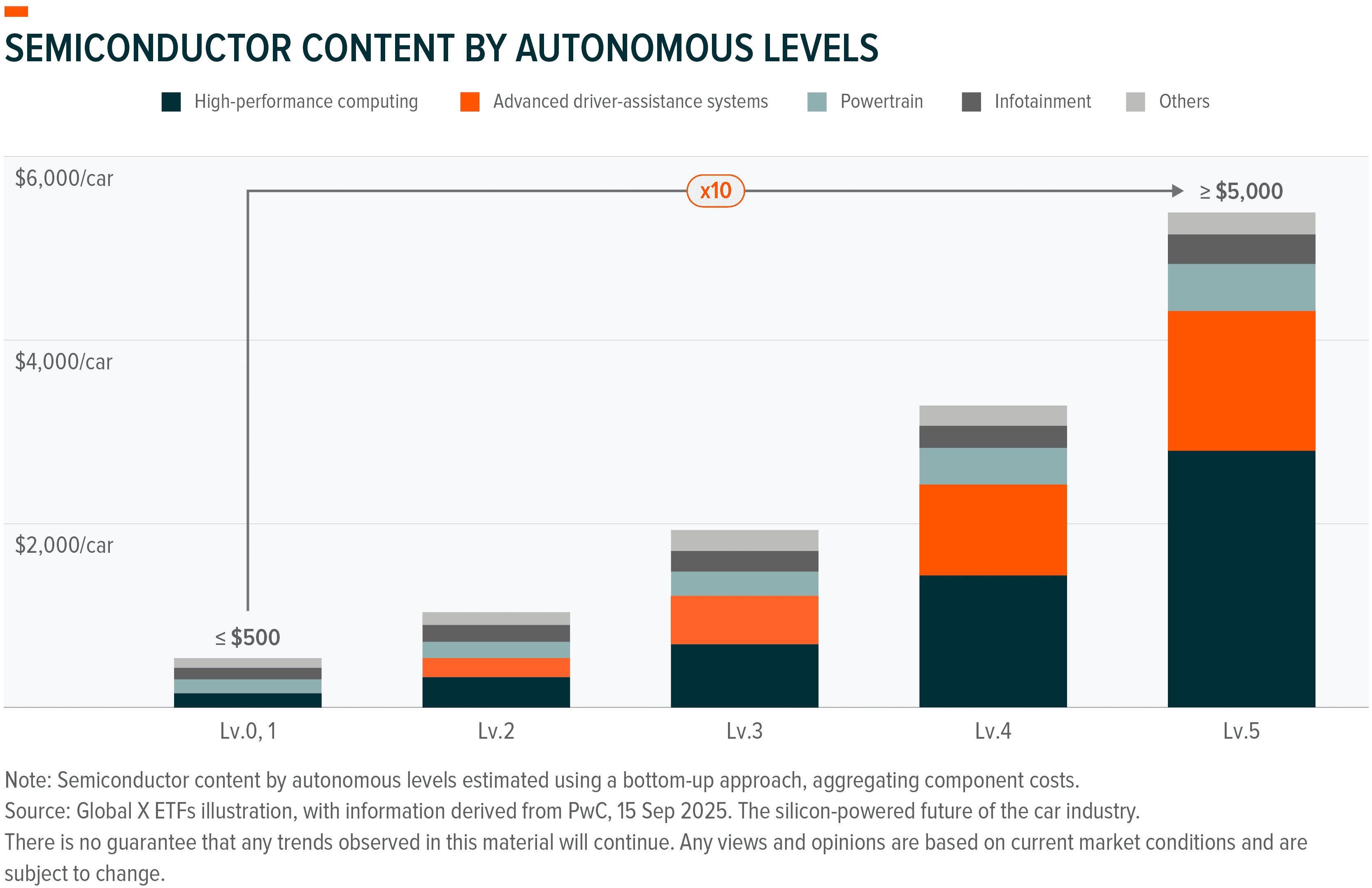
Vehicle computing can raise semiconductor and software content, but the relationship is not mechanical. The PwC estimates in the chart are best viewed as directional, as centralised electronic architectures can consolidate functions into fewer, more powerful processors, and content varies by vehicle segment and feature set.⁵⁹ Electrification and autonomy also overlap without being synonymous, given advanced driver-assistance systems (ADAS) can be deployed regardless of powertrain. Under the SAE framework, Level 3 is conditional automation that requires the driver to take over when requested, while Level 4 operates without a driver only within defined service areas; Level 5 represents full automation under all conditions.⁶⁰ Nvidia's partnerships with Mercedes-Benz,⁶¹ Hyundai,⁶² BYD,⁶³ and Uber demonstrate the breadth of industry investment,⁶⁴ but revenue timing will depend on validation, regulation, liability and deployment economics. Nearer-term monetisation may come from driver assistance, connectivity and software services before broad Level 4 or Level 5 adoption.
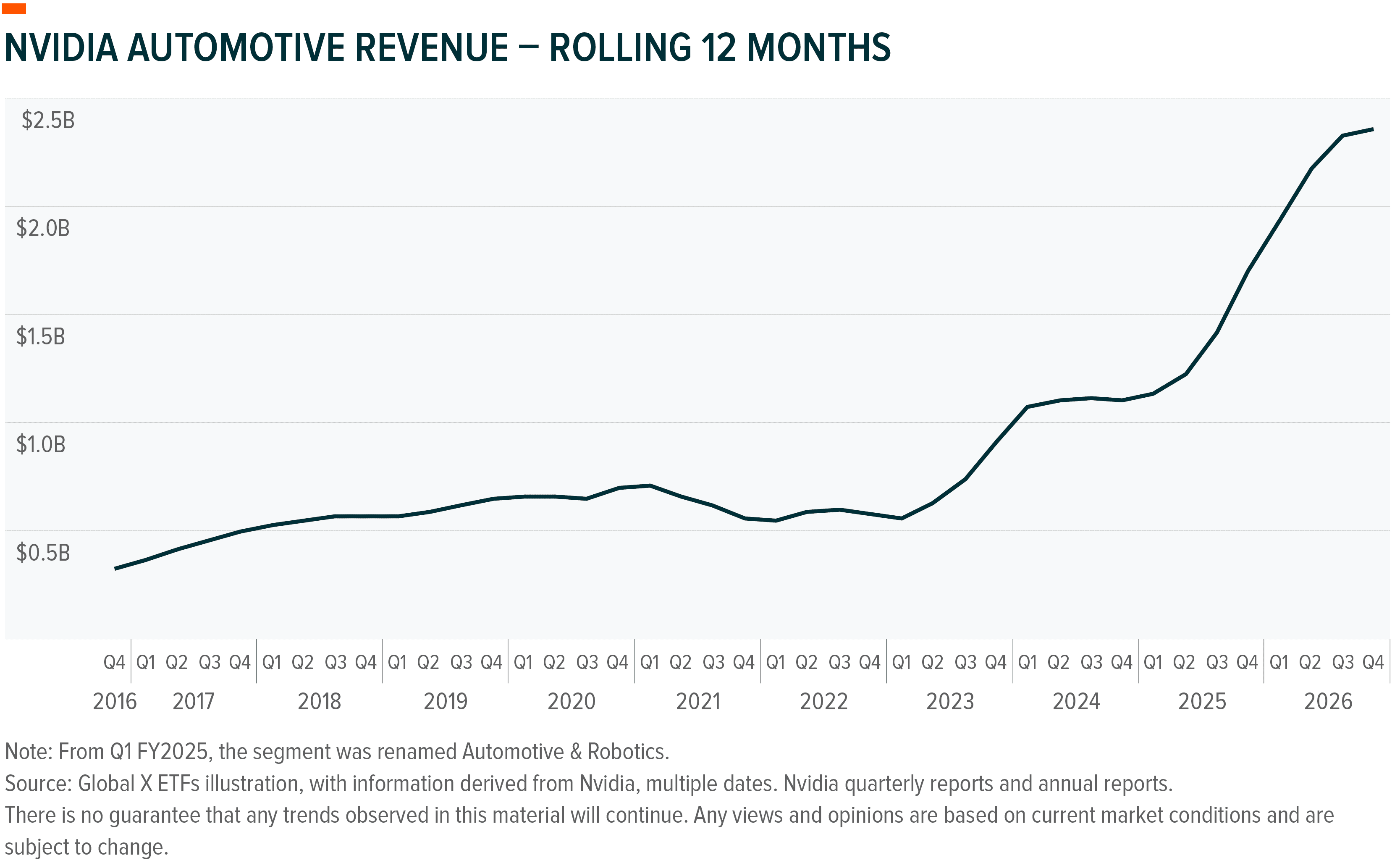
The global EV transition remains on course, but its journey is becoming more regional, competitive and capital intensive. China and emerging markets are driving volume growth, while the U.S. shows how quickly policy, affordability and product mix can alter demand and investment returns. Automakers are responding with multi-powertrain portfolios, partnerships and adjacent businesses. Amidst the shifting landscape, durable opportunities could accrue to companies with cost advantages, differentiated technology, disciplined capital allocation, and exposure to several parts of the value chain. Autonomous driving, humanoid robotics, defence and energy storage add optionality, with the potential to add complementary revenue streams in the medium-term.
This document is not intended to be, or does not constitute, investment research as defined by the Financial Conduct Authority.
1. IEA, 2026. Global Electric Vehicle Outlook 2026.
2. Ibid.
3. Ibid.
4. Ibid.
5. Reuters, 22 Jun 2026. Goldman Sachs says EV surge may cut oil demand by late 2027.
6. Reuters, 14 Jan 2026. China's regulators urge automakers to resist price wars in EV sector.
7. Reuters, 27 Mar 2026. BYD’s annual profit declines for first time in four years as price war hurts margins.
8. Financial Times, 14 Jul 2026. China’s monthly car exports surge past 1mn for first time.
9. Reuters, 26 Apr 2024. Insight: Why BYD’s EV exports sell for twice the China price.
10. Fastmarkets, 28 Apr 2026. Stella Li: Driving BYD’s EV story.
11. CNEVPost, 15 Jul 2026. BYD overhauls overseas brand structure, betting on channel integration and flash charging network.
12. The Guardian, 15 May 2026. EU carmakers pave way for Chinese rivals as balance in market shifts.
13. Ibid.
14. Ibid.
15. IEA, 2026. Global Electric Vehicle Outlook 2026, Trends in Electric Cars.
16. Ibid.
17. European Commission Joint Research Centre, 2024. Influence of vehicle and battery ageing and driving modes on emissions and efficiency in plug-in hybrid vehicles.
18. IEA, May 2026. Global Electric Vehicle Outlook 2026.
19. CNEVPost, 15 Jul 2026. BYD overhauls overseas brand structure, betting on channel integration and flash charging network.
20. Financial Times, 13 May 2026. BYD says ‘flash-charging’ will help its EVs take market share from petrol models.
21. IEA, 2026. Global Electric Vehicle Outlook 2026, Trends in Electric Cars.
22. Ibid.
23. IEA, 2026. Global Electric Vehicle Outlook 2026, Government Support for Electric Car Sales.
24. Ford Motor Company, 15 Dec 2025. Ford Follows Customers to Drive Profitable Growth; Reinvests in Trucks, Hybrids, Affordable EVs, Battery Storage; Takes EV-Related Charges.
25. General Motors, 27 Jan 2026. GM Q4 2025 Press Release and Financial Highlights.
26. Stellantis, 6 Feb 2026. Stellantis Resets its Business to Meet Customer Preferences and to Support Profitable Growth.
27. Volkswagen Group, 13 Mar 2026. Milestone of “In China, for China”-strategy: First car developed jointly by Volkswagen and XPENG rolls off the production line.
28. Volkswagen Group, 26 Jul 2023. More e-models for fast-growing e-mobility market in China: VW brand and Audi agree strategic cooperations with local automakers.
29. Stellantis, 8 May 2026. Stellantis And Leapmotor Announce Their Intention To Take Their Strategic Partnership To The Next Level.
30. Ibid.
31. Associated Press, 15 Dec 2025. Volkswagen’s $3.5B gamble: Can it win back share in the competitive Chinese market.
32. BMW Group, 25 Jun 2026. BMW Group advances the use of Physical AI in production with Figure 03 project in Spartanburg.
33. Mercedes-Benz Group, 18 Mar 2025. AI and humanoid robots.
34. Tesla, Accessed 15 Jul 2026. AI & Robotics.
35. Xpeng, 6 Nov 2024. Xpeng Unveils Kunpeng Super Electric System and AI-Defined Mobility Innovations At Xpeng AI Day.
36. Hyundai, 6 Jan 2026. Hyundai Motor Group Announces AI Robotics Strategy to Lead Human-Centered Robotics Era at CES 2026.
37. Morgan Stanley, 14 May 2025. Humanoids: A $5 Trillion Market.
38. BMW Group, 25 Jun 2026. BMW Group advances the use of Physical AI in production with Figure 03 project in Spartanburg.
39. Bain & Company, 23 Sep 2025. Humanoid Robots: From Demos to Deployment.
40. Goldman Sachs, 27 Feb 2024. The global market for humanoid robots could reach $38 billion by 2035.
41. Tesla, Accessed 15 Jul 2026. AI & Robotics.
42. Hyundai, 6 Jan 2026. Hyundai Motor Group Announces AI Robotics Strategy to Lead Human-Centered Robotics Era at CES 2026.
43. Financial Times, 9 Jun 2026. Renault to cap defence revenue at 5% as it pushes into drone making.
44. Thales, 16 Jun 2026. Renault Group and Thales enter into a strategic partnership to develop a sovereign drone industry in France.
45. Financial Times, 10 Jun 2026. Mercedes-Benz set to partner with drone defence start-up Tytan.
46. Financial Times, 6 Jul 2026. Converting car plants to make military drones will fail, warns Japan defence titan.
47. European Commission, 26 Jun 2026. First-ever EU tripartite agreement signed to boost energy storage.
48. SNE Research, 6 May 2026. From Jan to Mar 2026, Global EV Battery Usage Posted 244.6GWh.
49. Contemporary Amperex Technology Co,. Limited, 9 Mar 2026. CATL Annual Results Announcement For The Year Ended December 31, 2025.
50. Tesla, 22 Feb 2017. Tesla 2016 Annual Report.
51. Tesla, 2 Jul 2026. Tesla Second Quarter 2026 Production, Deliveries & Deployments.
52. Ford, 11 May 2026. Introducing Ford Energy.
53. Reuters, 18 May 2026. Ford unit signs five-year energy storage deal with EDF.
54. GM, 9 Jun 2026. GM Empower 2026: Scaling the future of electrification, batteries, and energy.
55. Hyundai, 28 Nov 2025. Hyundai Motor Group Expands EV Energy Services with Vehicle to Grid and Vehicle to Home.
56. Volkswagen Group, 9 March 2026. Elli Powercenter: Volkswagen Group commissions first large-scale battery storage and increases energy trading portfolio.
57. IEA, 2026. Global Electric Vehicle Outlook 2026, Electric Vehicle Batteries.
58. IEA, 2026. Global Electric Vehicle Outlook 2026, Emerging Battery Chemistry and Designs.
59. PwC, 15 Sep 2025. The silicon-powered future of the car industry.
60. US National Highway Traffic Safety Administration, 2022. Levels of Driving Automation.
61. Nvidia, 5 Jan 2026. NVIDIA DRIVE AV Software Debuts in All-New Mercedes-Benz CLA.
62. Nvidia, 16 Mar 2026. Hyundai Motor, Kia and NVIDIA Expand Strategic Partnership for Next-Generation Autonomous Driving Technology.
63. Nvidia, 16 Mar 2026. BYD, Geely, Isuzu and Nissan Adopt NVIDIA DRIVE Hyperion for Level 4 Vehicles.
64. Nvidia, 31 May 2026. NVIDIA DRIVE Hyperion Becomes the Global Platform for a Robotaxi-Ready World.